





ES
Pedro&Juana participaron en el concurso para el pabellón anual de El Museo Experimental el Eco del 2012 y se llevaron una mención honorífica. Aquí la propuesta:
Ingredientes:
200 m de tela de gallinero – $4,466
20 km de mecate – $2,640
20,000espigas de trigo – $4,543
8 litros de retardante de fuego (Previfuego)* – $1,100
1 tonelada de hule granulado (superficie negra) – $4,408
1 juego de herramientas – $1,975
1 plataforma de tijera rentada por dos semanas – $8,067
Flete (ida y vuelta) – $3,800
4 floristas por quince días – $36,000
TOTAL $67,000
*especial para palapas en exteriores, se aplica por aspersión
Preparación:
- Prepárate para no buscarle significados ocultos a las cosas; acepta que la experiencia de lo que nos rodea y lo que hacemos pueden ser significativas en sí mismas.
- Conoce tu cocina, tu región, tus sabores.
- Escoge una pieza o un módulo como punto de partida.
De hecho, reúne un chingo de un material manufacturado industrialmente y tenlo a la mano. - Dale un nombre, algo así como “potpurri”.
- Realiza distintas operaciones con el material: suma sus partes, apílalo, córtalo, quémalo, alínealo, contémplalo desde distintos ángulos. Para entender el comportamiento de tu material, huélelo, tócalo, cómelo, duerme con él; que no te de miedo.
- Empieza a construir algo con tu material. En cuanto se rebele, recurre a herramientas que te permitan controlarlo; crea un diálogo entre tus ingredientes y las herramientas que tengas a tu disposición (análogas y digitales).
- Añade al proyecto un manojo de requerimientos programáticos y espera a que se altere la forma.
- Descansa, date una vuelta para tomar aire.
- Cuece a escala real un modelo de lo que has mezclado hasta el momento.
- Intenta algo completamente distinto.
- Pasa unas horas en crisis reflexionando acerca de las implicaciones intelectuales y conceptuales de lo que estás produciendo.
- Prepárate para tirar todo al triturador.
- Piénsalo toda la noche; puedes intentar dormir.
- ¡Listo! Estás preparado para amar a “potpurri” de nuevo; ahora sí podrás lograr un platillo definitivo.
- Piensa en una manera de explicar la relación de cada uno de los pasos anteriores.
- Pasa un tiempo bajo, sobre, junto o dentro de tu modelo, ponderando todo lo que has hecho hasta el momento
- Encuentra esa frase —preferiblemente por accidente— que hará que todo cobre sentido:
“Si al inicio la idea no es absurda, entonces no tiene ninguna esperanza.” —Albert Einstein
Forma de servir:
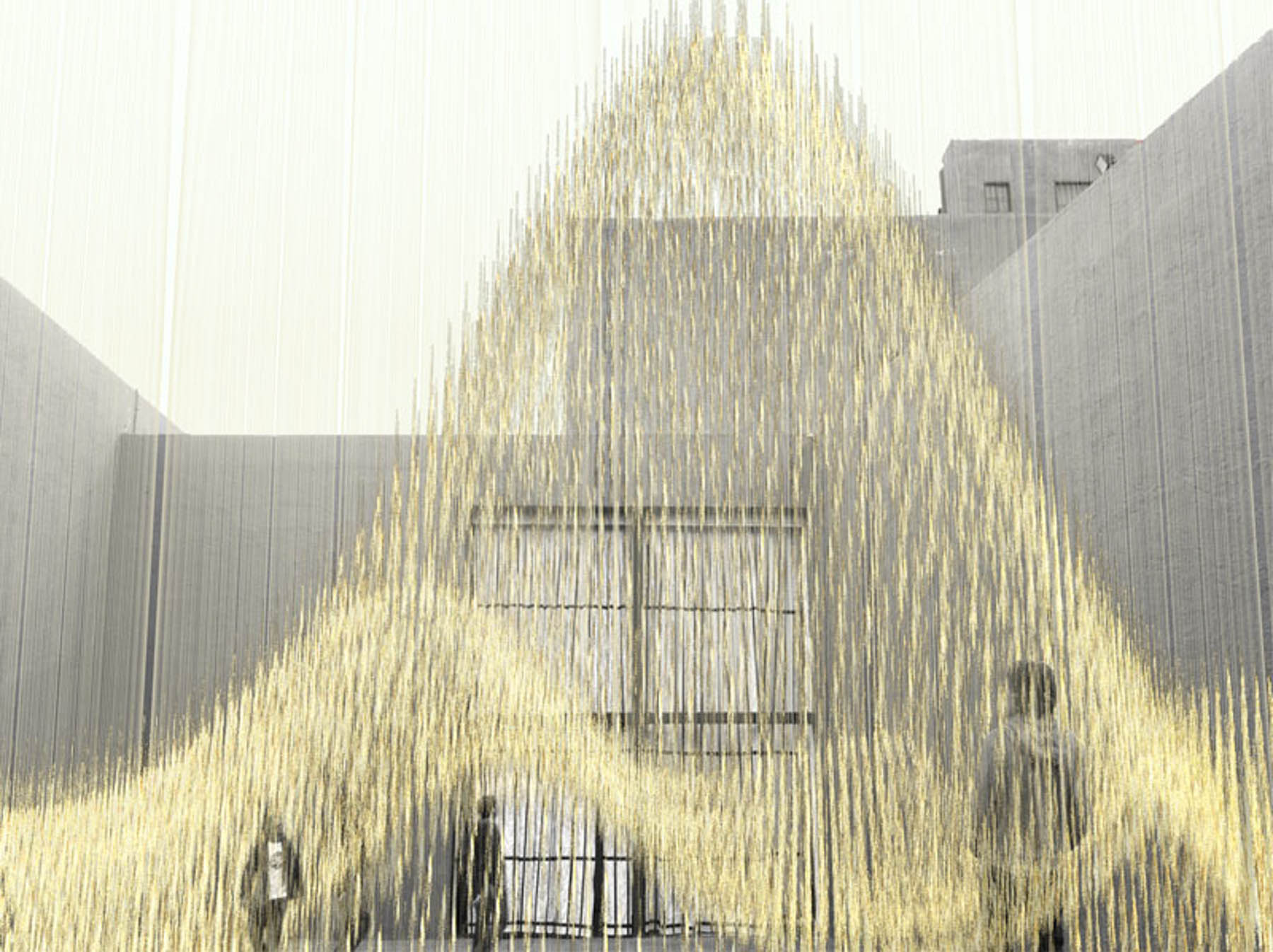
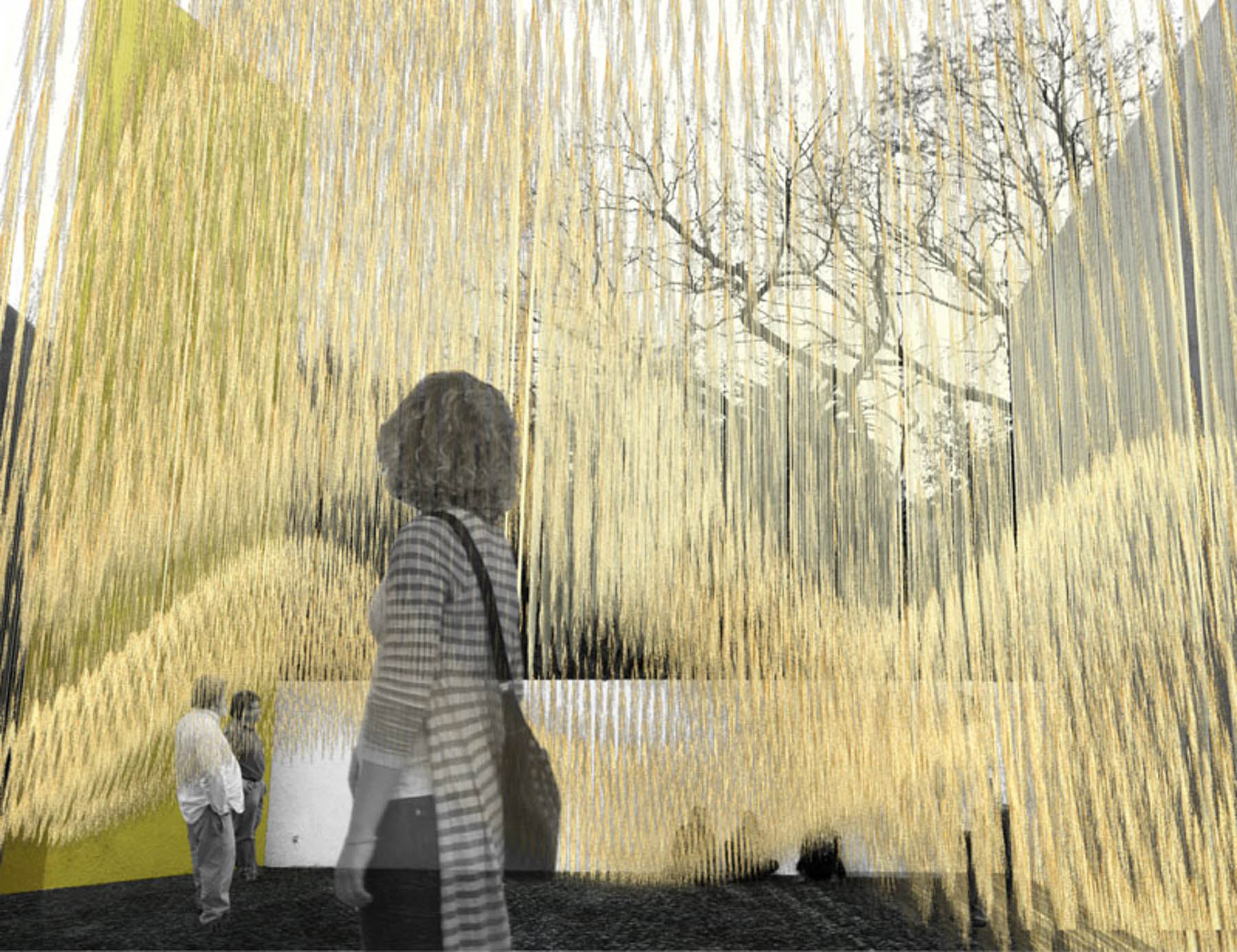
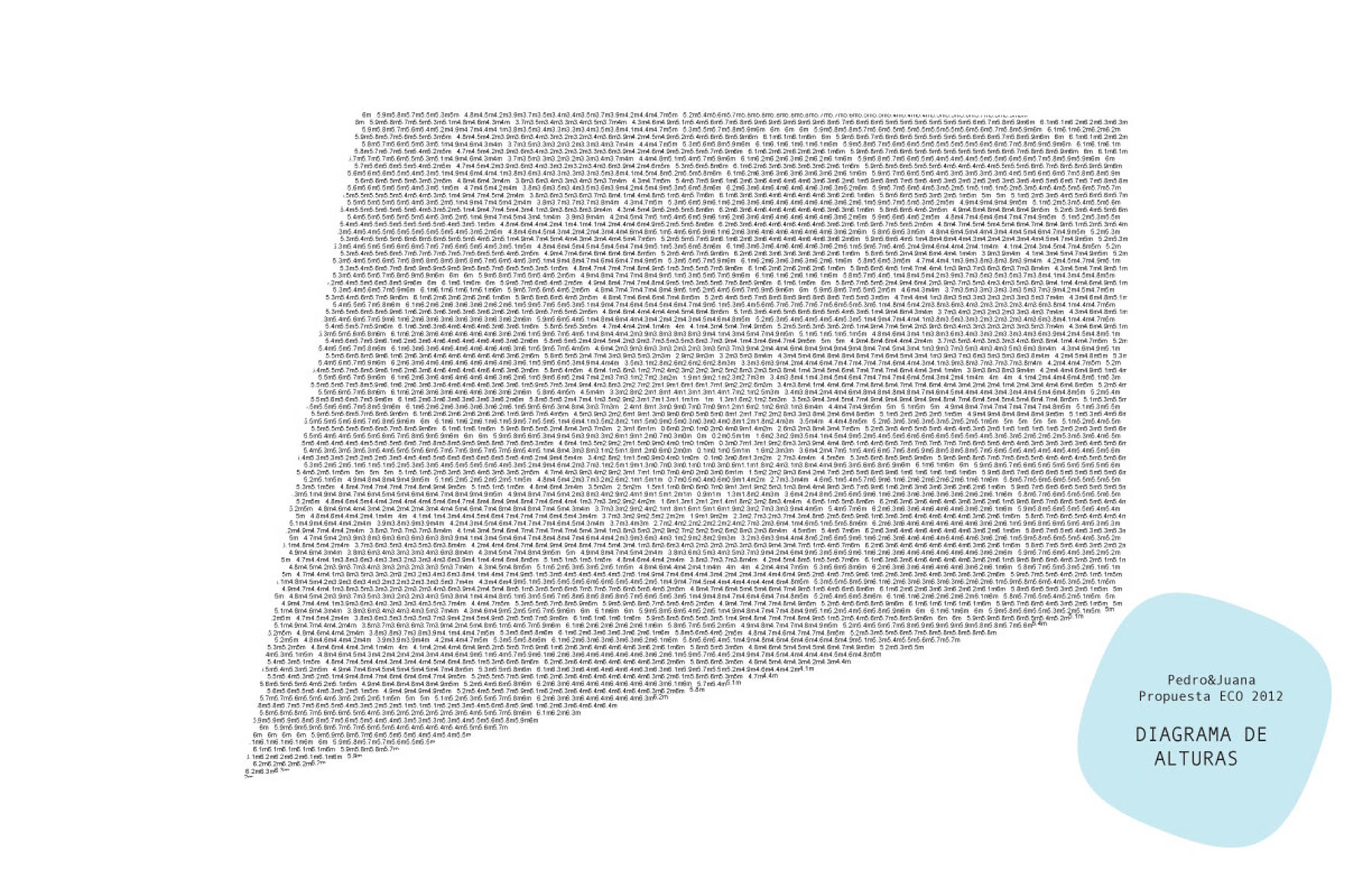
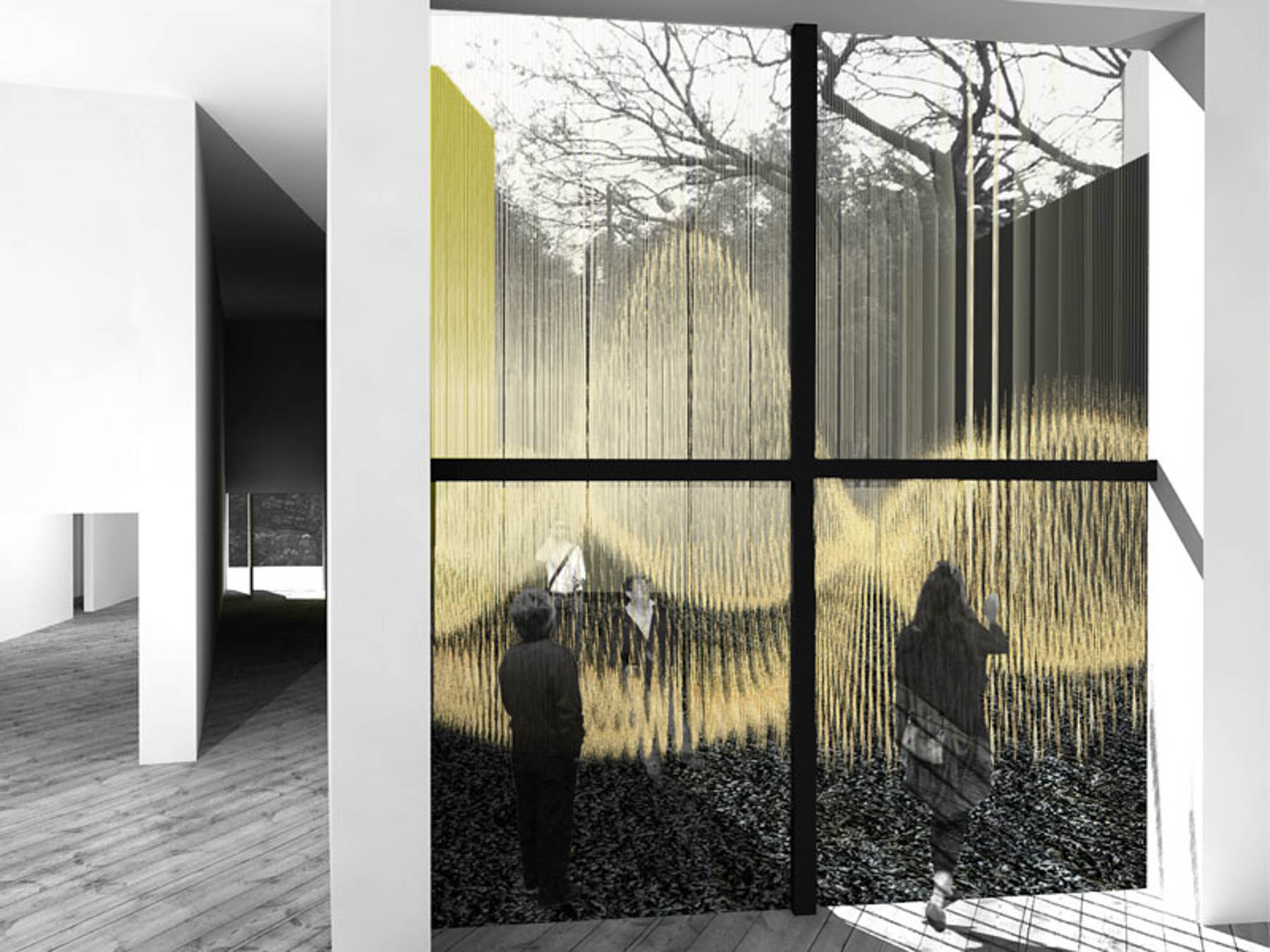
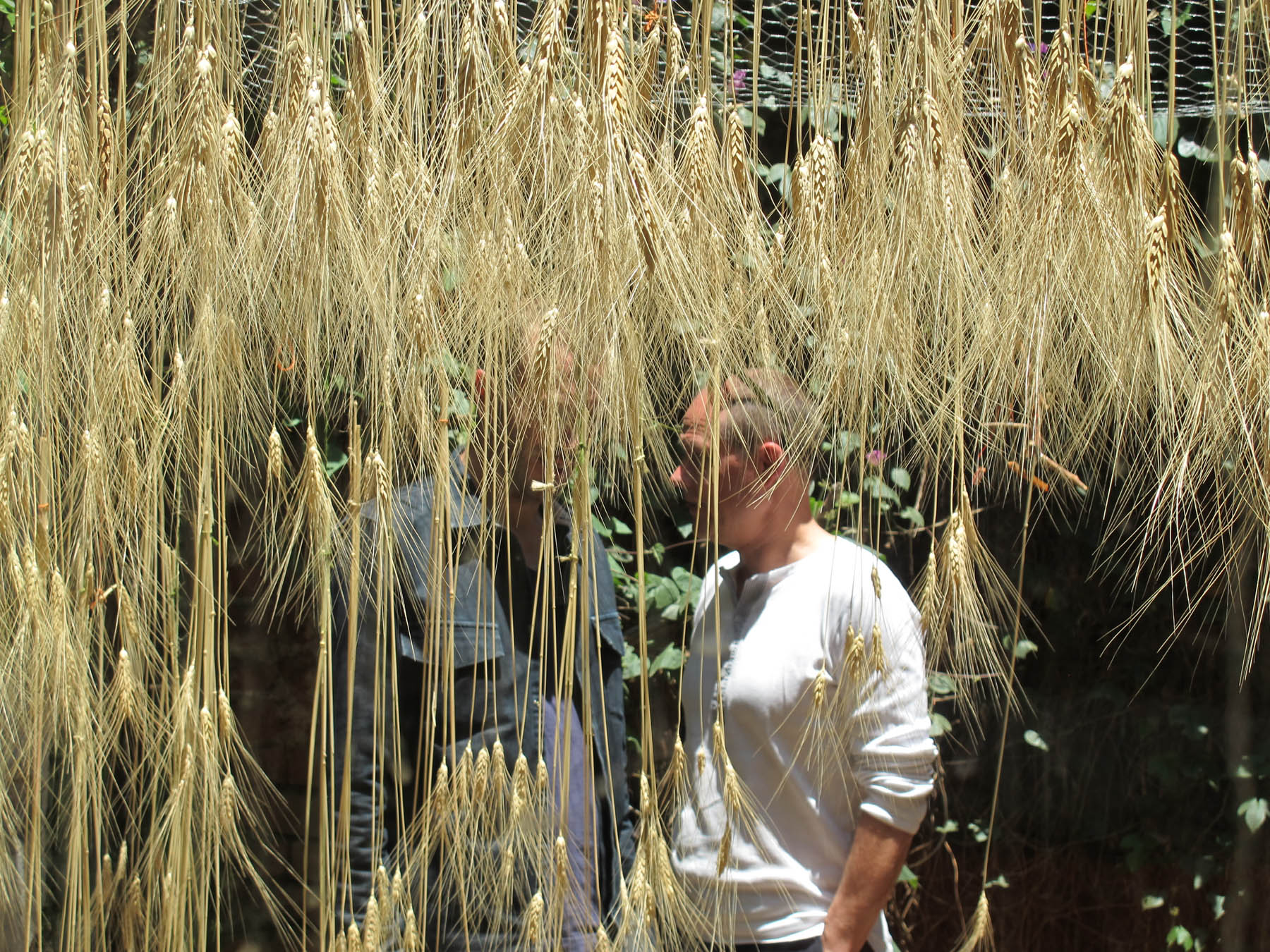
Suspende las 20,000 espigas de trigo con los 20 kilómetros de mecate. Déjalas mecerse con el viento, mojarse con la lluvia y secarse con el sol del patio del Eco. Camina entre las espigas y observa sus aperturas, entrecerradas; aprécialas como una amalgama homogénea, diáfana, con densidades cambiantes. Deambula, encuéntrate con fronteras porosas. Siéntate bajo una masa tallada de trigo. Cada pieza es una olorosa alergia que suena al chocar con otra. Cuenta ya con 20,000 espigas de trigo contenidas dentro de una superficie de seno y coseno volteada al revés; es un platillo frágil, pero también rugoso y duradero.
EN
Pedro&Juana participated in the 2012 edition of the Museo Experimental el Eco’s annual pavilion and received an honorable mention. The proposal:
Ingredients:
200 m of chicken-wire mesh – $4,466
20 km of rope – $2,640
20,000 wheat stalks – $4,543
8 L of fire retardant (Previfuego)* – $1,100
1 ton of crumb rubber (black surfacing) – $4,408
1 tool kit – $1,975
1 scissor lift – two weeks rent – $8,067
Freight (round-trip) – $3,800
4 florists for fifteen days – $36,000
*For outdoor palapas, applied by spraying
TOTAL MXN $67,000
Preparation:
- Prepare yourself to not look for hidden meanings in things; accept that the experience of our surroundings and our actions can be meaningful in themselves.
- Get to know your kitchen, your region, your flavors.
- Choose a piece or a module as a starting point. In fact, bring together a shitload of any industrially manufactured material and keep it at hand.
- Give it a name—something like “potpourri.”
- Perform different operations on the material: combine parts, stack it, cut it, burn it, align it; contemplate it from various angles. To understand how it behaves, smell it, touch it, taste it; do not fear it.
- Begin to build something with your material; when it stops cooperating, use tools that let you control it; create a dialogue between your ingredients and the tools at hand (analog and digital).
- Add a bundle of programmatic requirements and wait for the form to shift.
- Rest and take a breath.
- Cook a full-scale model of what you have mixed so far.
- Try something completely different.
- Spend a few hours in crisis reflecting over the intellectual and conceptual implications of what you’re producing.
- Be prepared to throw everything into the shredder.
- Think it over all night; you may attempt to sleep.
- Done! You can now love “potpourri” again; now you can achieve a definitive dish.
- Find a way to explain the relationship between each of the previous steps.
- Spend time under, on, beside, or within your model, reflecting on what you’ve done.
- Find that phrase—ideally by accident—that will make everything make sense:
“If at first the idea is not absurd, then there is no hope for it.” — Albert Einstein
Serving suggestion:
Suspend the 20,000 wheat stalks from 20 km of rope. Let them sway in the wind, be wetted by rain, and dry in the sun of El Eco’s courtyard. Walk among the stalks and observe how they open and close—appreciate them as a diaphanous amalgam with shifting densities. Wander; encounter porous boundaries. Sit beneath a carved mass of wheat. Each piece is a fragrant allergy that sounds when it meets another. You now have 20,000 stalks contained within a sinuous surface; it is a fragile installation, yet rugged and durable.