






ES
Querido Randolph,
¿Te acuerdas de cuando el Chicago Cultural Center era la biblioteca pública? ¿Te acuerdas de Randolph Square junto a Randolph Street? ¿Te acuerdas de los puestos de periódico dentro del square —o prefieres llamarle plaza— que permitían a la gente de Chicago leer la última edición del diario? ¡Qué raro llamarle plaza, considerando que se encuentra al interior de un edificio!
En fin, Randolph Square era el lugar a donde ir a leer las últimas noticias o sólo a ver las fotos. Imagínate los encuentros sociales, las discusiones políticas y los chismes de la mafia que sucedían dentro y fuera de la plaza. Más tarde, se mudaron los libros y con ellos se fueron los puestos de periódico, los chismes y las discusiones políticas. Su naturaleza empezó a cambiar. Junto con su infraestructura, el edificio progresaba: se cerró el gas y se prendieron las luces eléctricas. Cuando el domo de cristal empezó a gotear, recibió un cascarón de concreto, state of the art. No más luz natural; a partir de entonces todo dependería de la luz eléctrica. Los mosaicos empezaron a despegarse del piso; se discutió la idea de cubrirlos con vinilo, pero ganó la alfombra. Luego llegó la luz fluorescente. No recuerdo si eso fue antes o después de la alfombra; mi memoria está un poco borrosa, por lo tanto no confíes demasiado en ella.
En algún momento se decidió demoler el edificio, pero como fue construido mediante un aumento del uno por ciento a los residentes de Chicago, los ciudadanos recordaron que el edificio les pertenecía y no lo permitieron. ¡Randolph Square cambió de nuevo! Hoy le llaman “la sala de la ciudad” (living room of the city). ¡Imagínate algo íntimamente público!
Se retiró la alfombra y relucieron los mosaicos; de pronto, la plaza quedó completamente desnuda, salvo por sus muross y columnas cubiertas de mármol ¡Bastante moderno! Y al mismo tiempo algo romano, dentro de un edificio de excesos victorianos. Un montón de mesas extrañas —algunas provenientes de un bistró francés, otras que parecen medievales— ocupan la plaza. No muy “sala” a excepción de los bailes que suceden el último viernes de cada mes.
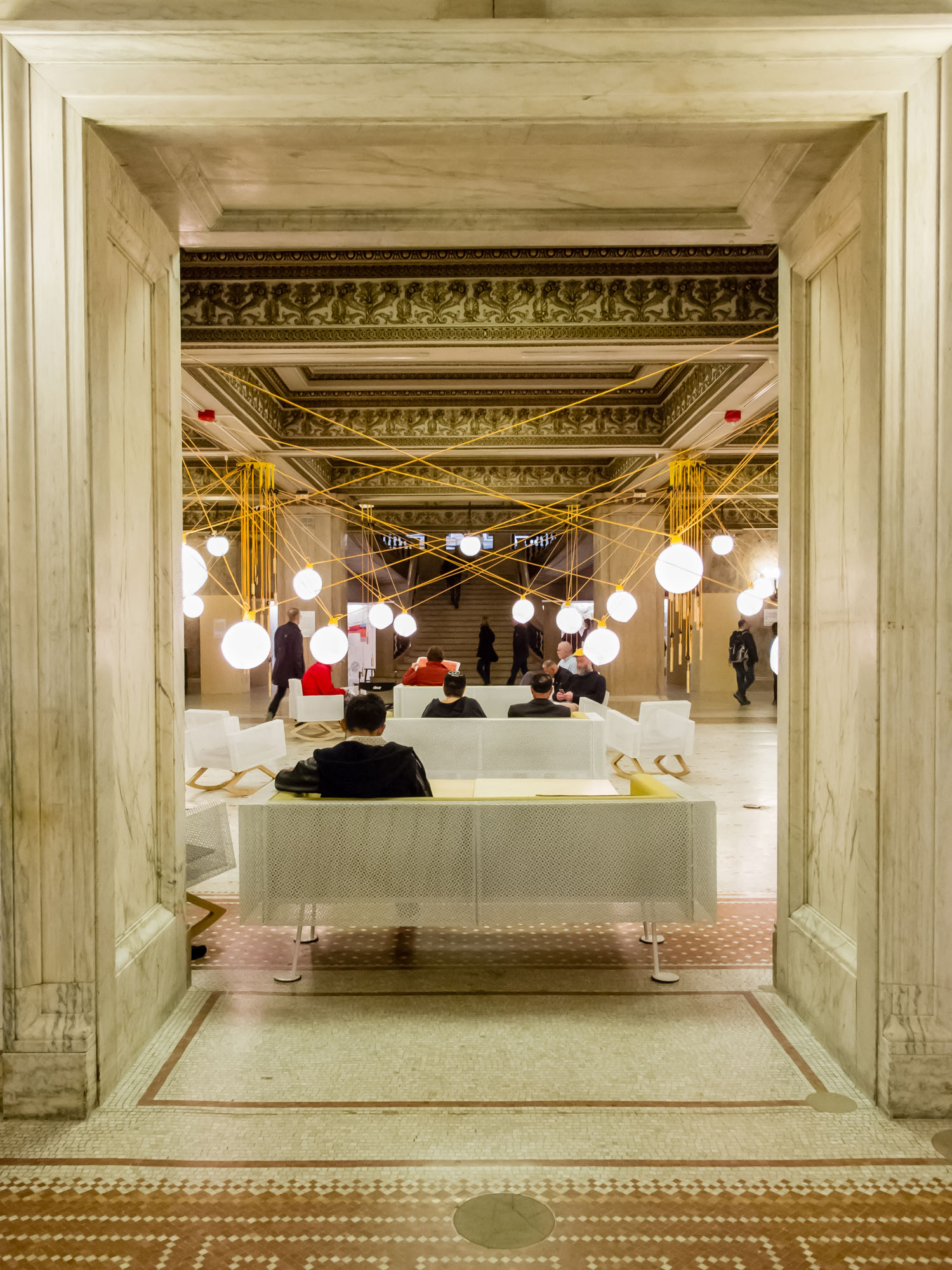
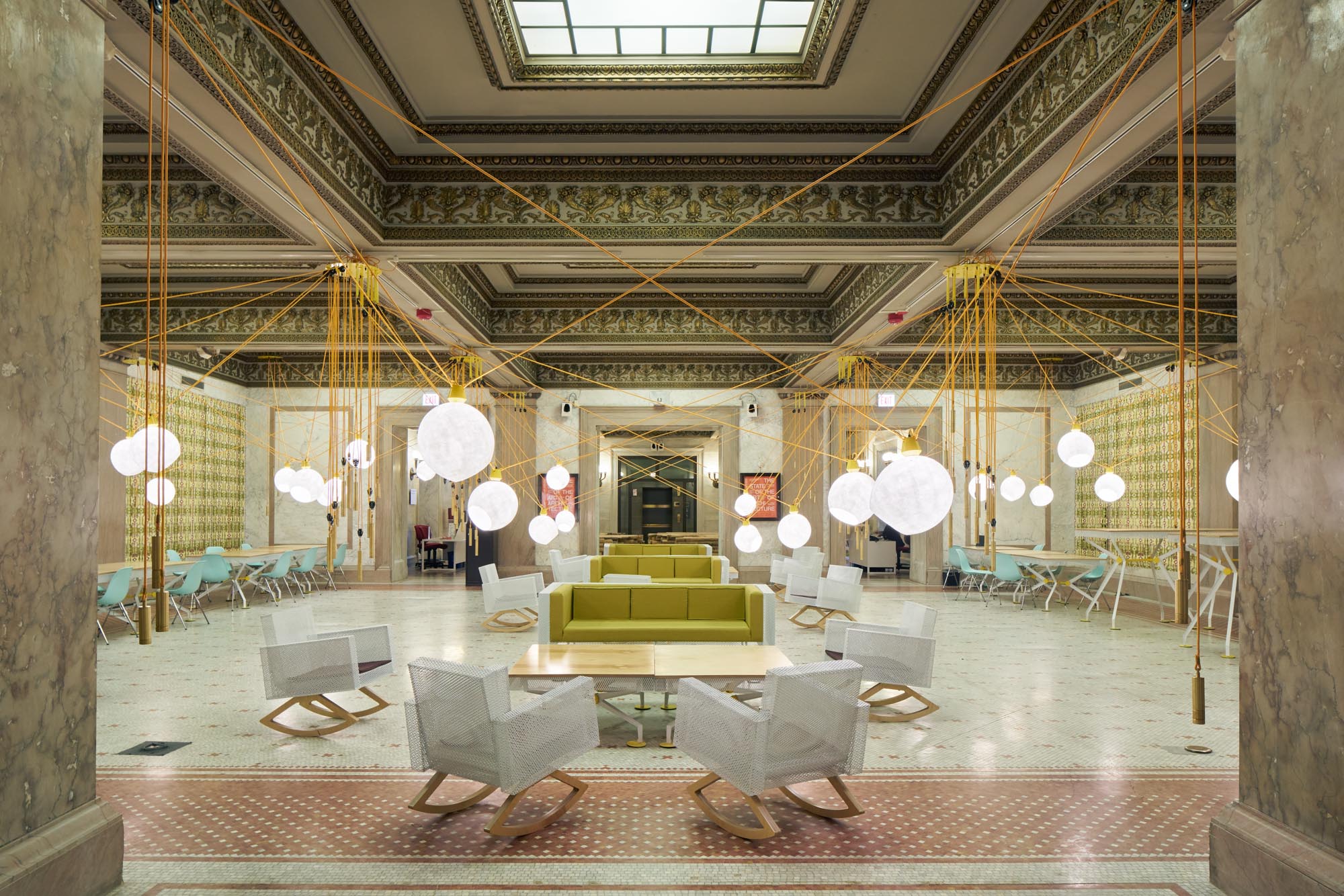
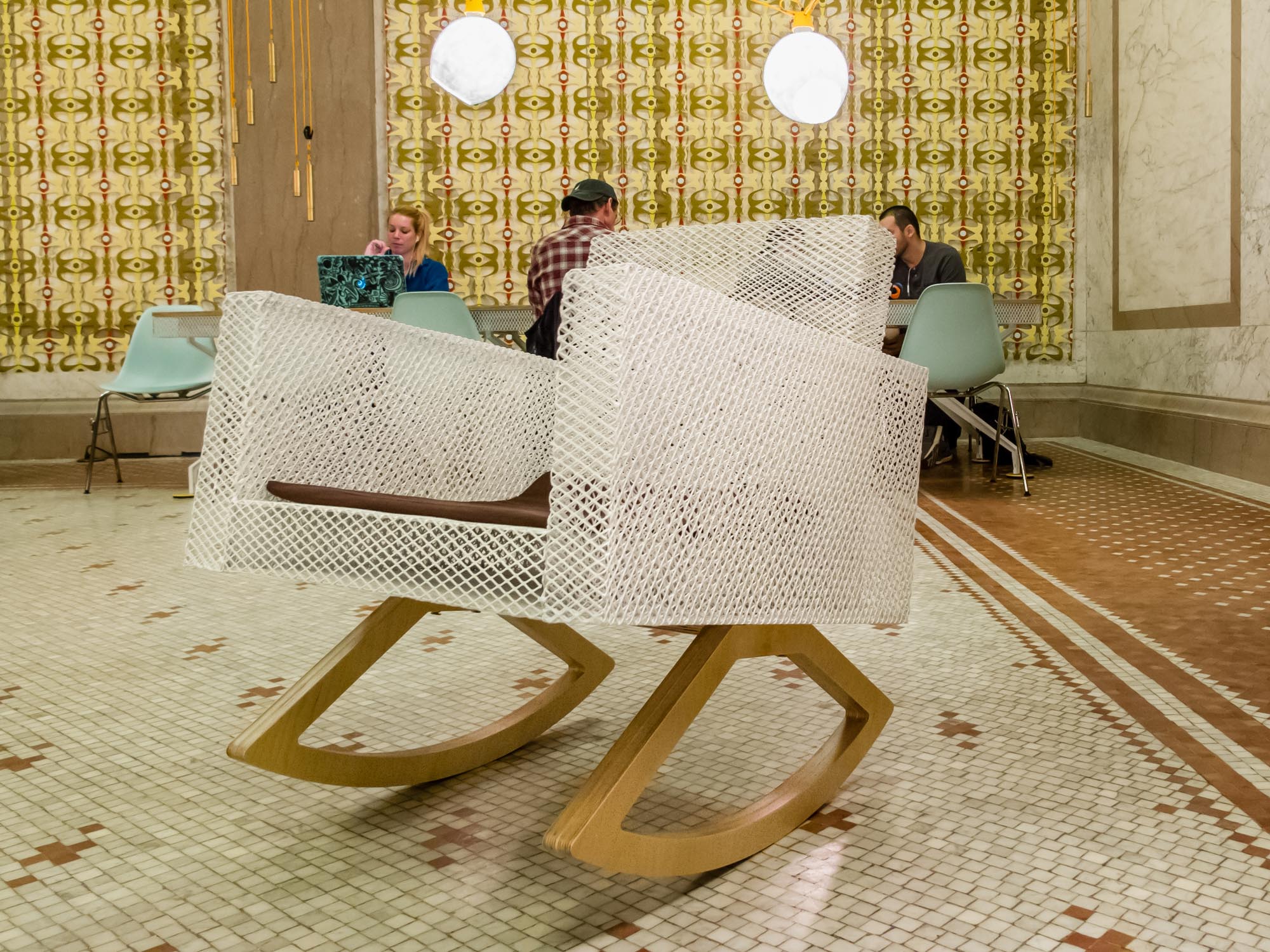
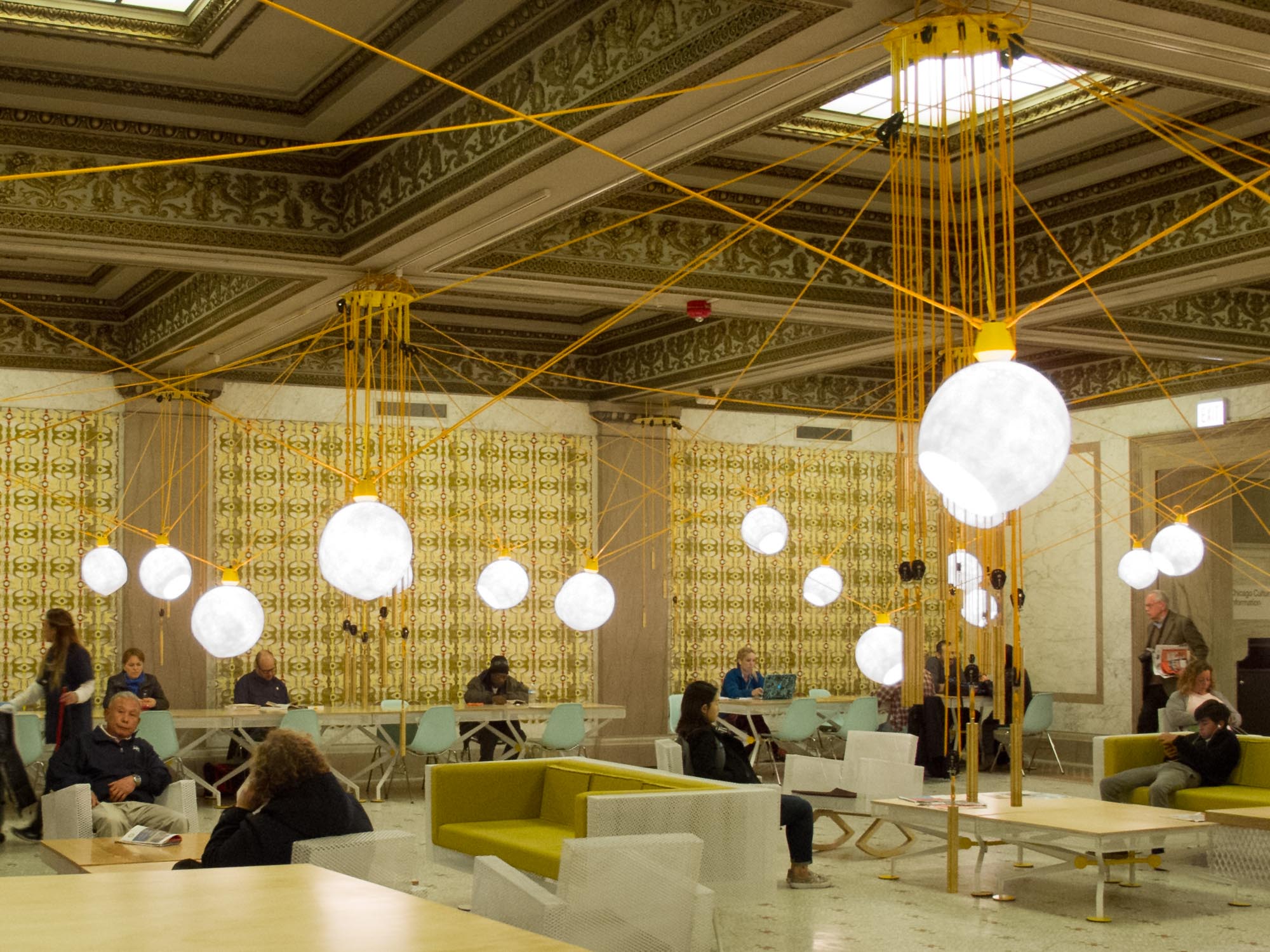
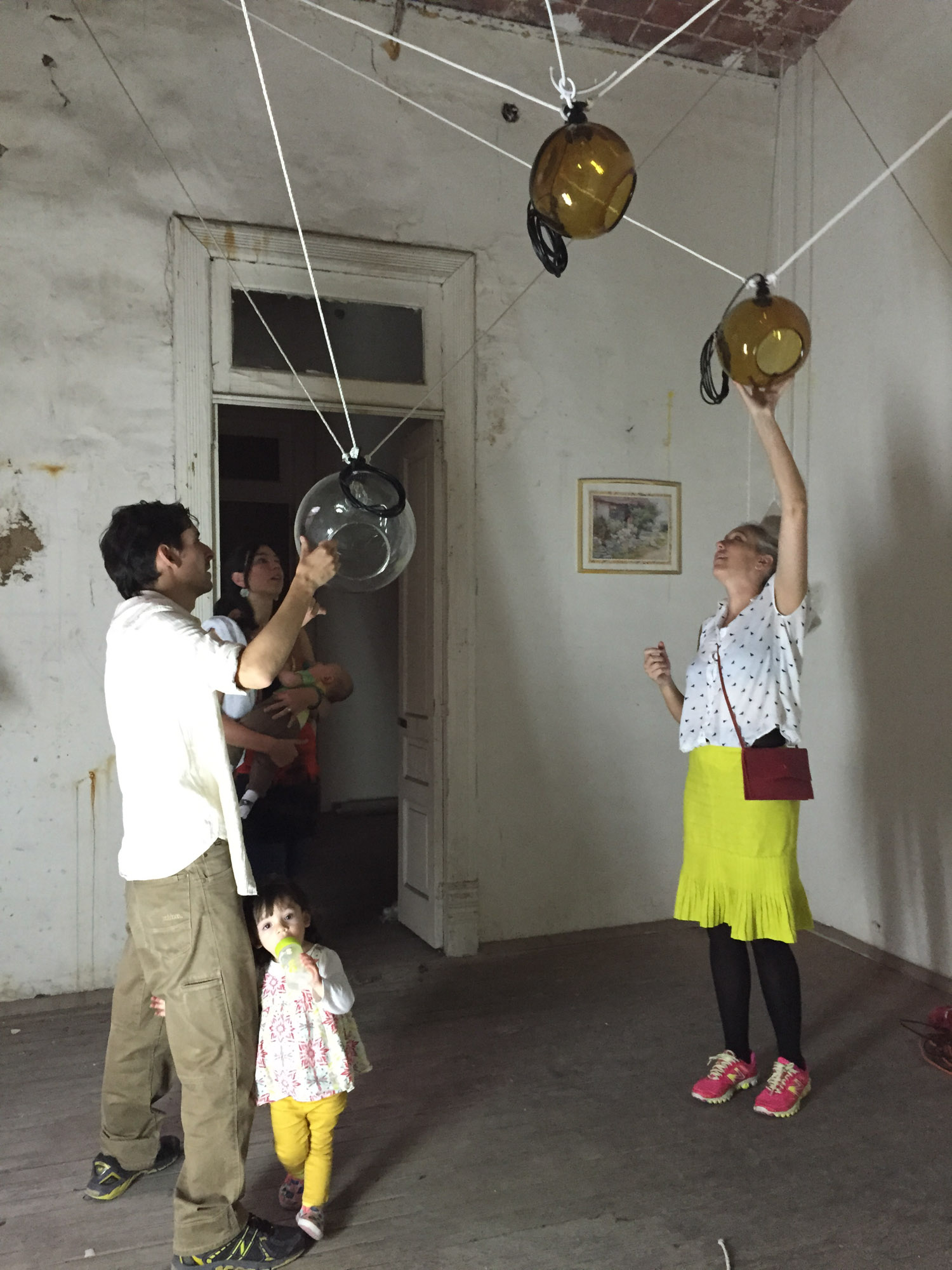
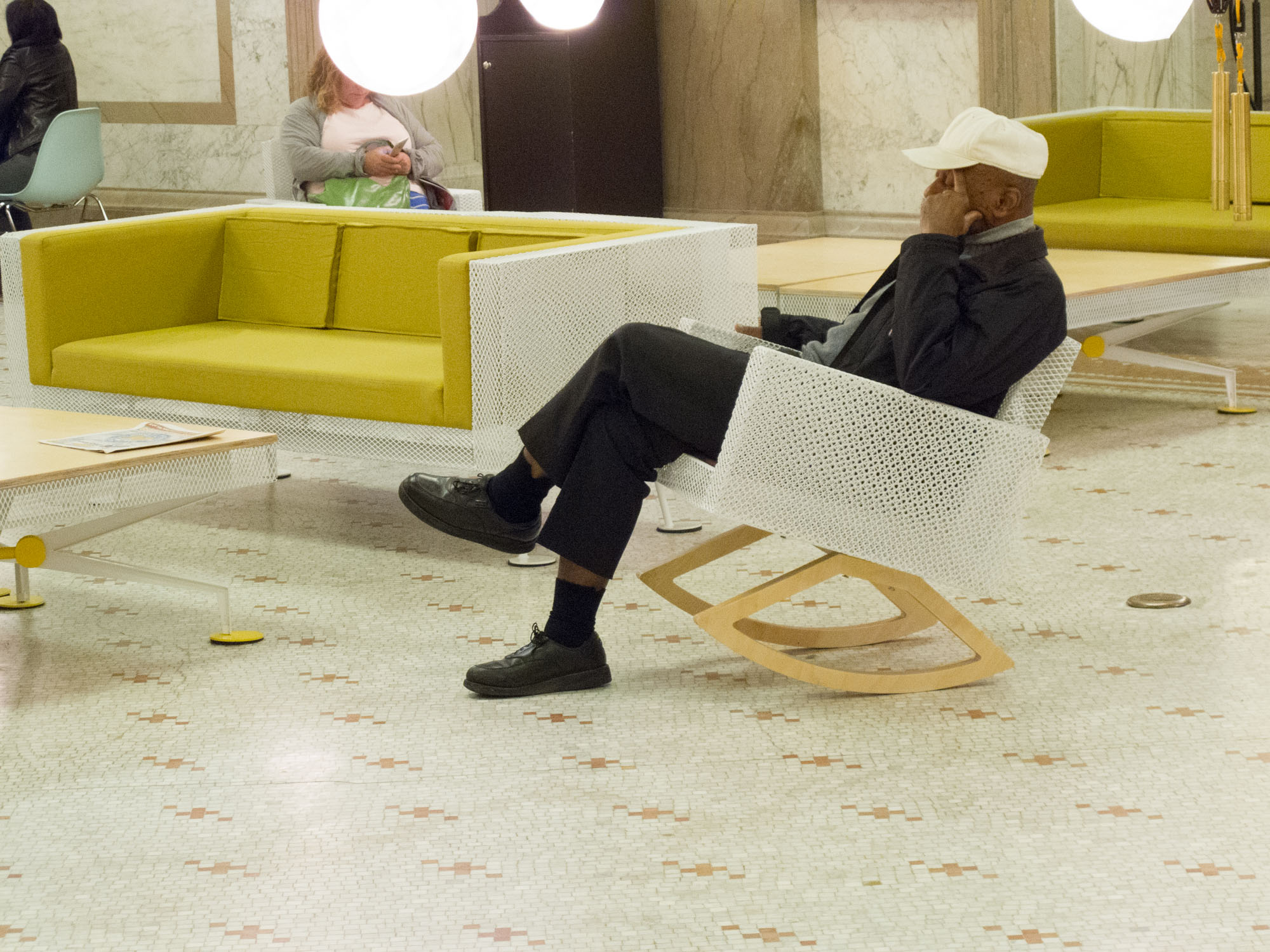
El último rumor dice que Randolph Square ¡cambia de nuevo! Unos arquitectos quitarán la luz fluorescente de los plafones y la reemplazarán por una especie de telaraña triangular de piola, de la que suspenderán unas esferas blancas que recuerdan a los arbotantes de gas de antaño. El sistema funciona manualmente, por medio de empujar y jalar. La luz y su sombra se transforman, prometiendo una sensación de cambio a lo largo del día. Las paredes romanas de mármol se vestirán de pintura griega reconectándose con el plafón original y sus molduras. El espacio se volverá inestable, acercándose a un ideal de domesticidad dentro del espacio público. Habrán mecedoras; sofás en donde recostarse; y mesas para usar de pie. Finas transgresiones tipológicas que guiñen hacia algo más. Todo esto se sumará a una conversación entre el cuerpo y el objeto; o, tal vez, sólo entre el mobiliario y los ciudadanos de Chicago que lo utilizarán.
Siempre tuyos,
Pedro&Juana
EN
Dear Randolph,
Do you remember when the Chicago Cultural Center used to be the public library? Do you remember Randolph Square, just off Randolph Street? Do you remember the newspaper stands inside the square—or would you rather call it a plaza?—where Chicagoans would read the latest edition of the daily paper?. Strange to call it a plaza, considering it is located inside a building!
Randolph Square was once the place to go to read the news or simply look at the pictures. Imagine the social encounters, political discussions, and mafia gossip that unfolded in and around that square. Later, when the books were moved in, the newspaper stands had to go, and with them, the gossip, and the political discussions. Its nature began to shift. Along with its infrastructure, the building progressed: gas was shut off and electric lights were switched on. When the glass dome began to leak, it received a concrete shell—state of the art. No more natural light; from then on, everything would depend on electricity. The mosaics began to come loose from the floor. There was talk of covering them with vinyl, but carpeting prevailed. Then came fluorescent light. I can’t quite remember whether that happened before or after the carpet—my memory is a bit hazy, so don’t rely on it too much.
At some point, the building was slated for demolition. , But since it had beenfunded through a 1% tax increase on the Chicago residents, the people remembered that it was theirs in the first place—and refused to let it go. And Randolph Square changed again. Today it’s called “the living room of the city.” Imagine something intimately public!
The carpet was removed and the mosaics reappeared; suddenly the plaza stood bare, except for its marble-clad walls and columns—quite modern! And at the same time, somehow Roman, inside a building of Victorian excess. A collection of curious tables—some reminiscent of a French bistro, others seemingly medieval—occupies the space. Not very “living room,” except for the dances that take place every last Friday of the month.
Rumor has it that Randolph Square will change once more. Some architects took out the fluorescent lighting from the ceiling coffers, replacing them with a web of rope from which white spheres are suspended—evoking the gas-lit sconces from back in the day. The system operates manually, through pushing and pulling. Light and shadow shift throughout the day, promising a continuous sense of transformation. The Roman marble walls will be dressed in Greek paint, reconnecting with the original ceiling and its moldings.
The space becomes slightly unstable, edging towards an ideal of domesticity within the public realm. There are rocking chairs, sofas to lie on, and standing tables. Subtle typological transgressions that hint at something else. It all adds up to create a conversation between the body and the object—or perhaps simply between the furniture and the Chicagoans who will use it.
Yours truly,
Pedro&Juana